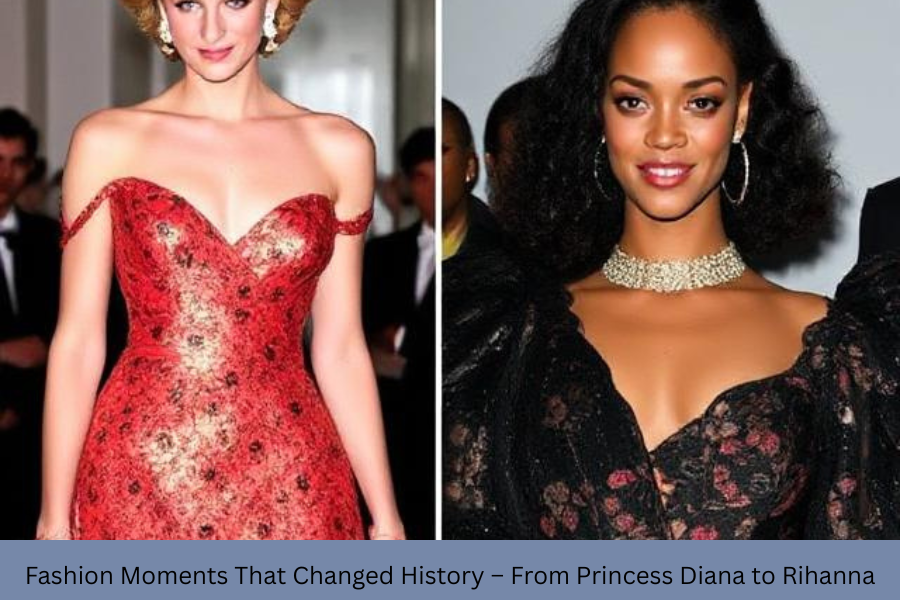
Fashion isn’t just about clothes. It has the power to convey messages, spark revolutions, and change perceptions across the globe. Some fashion moments have become iconic because they broke boundaries, altered cultural narratives, or reflected pivotal moments in time. From Princess Diana’s groundbreaking looks to Rihanna’s fearless fashion choices, this article will dive into the fashion moments that forever shaped history.
Introduction: Fashion as a Cultural Catalyst
Fashion isn’t just a way to express individual style. It’s often a reflection of the times, carrying with it social, political, and cultural commentary. Some fashion moments have made such an impact that they’ve transcended beyond the runway or red carpet, becoming moments in history.
The Power of Fashion in History
Fashion’s ability to influence politics, social movements, and even the course of history is undeniable. Whether it’s through a single dress, a pair of shoes, or a hairstyle, certain fashion choices have sent a message to the world about who we are, what we stand for, and how we perceive the world around us.
Princess Diana: The Fashion Icon Who Redefined Royal Style
Princess Diana was more than just a member of the British royal family—she was a fashion trailblazer. Her wardrobe choices were meticulously planned, yet often subtle enough to challenge traditional norms. Let’s explore a few moments when Diana’s fashion broke barriers.
The ‘Revenge Dress’
One of the most iconic moments in Diana’s fashion history came in 1994, when she wore a black off-the-shoulder dress by Christina Stambolian to a Vanity Fair party. This stunning dress became known as the “Revenge Dress,” as it was worn just hours after her ex-husband, Prince Charles, publicly admitted to his affair with Camilla Parker Bowles. Diana’s outfit symbolized empowerment and defiance, showing the world that she was no longer a passive figure in the royal family.
Diana’s Non-Conformity
Princess Diana also became famous for stepping away from the typical royal wardrobe of conservative suits and dresses. She often wore more casual attire—like jeans and sneakers—which gave her a relatable, human quality that endeared her to millions worldwide. Diana’s fashion choices told a story of personal independence, and in some ways, her fashion was a precursor to the democratization of fashion we see today.
Audrey Hepburn: The Timeless Elegance
Audrey Hepburn remains one of the most iconic fashion figures in history. Known for her grace and sophistication, Audrey’s style transcends time, with many of her looks still influencing modern fashion.
The Little Black Dress
Perhaps Hepburn’s most lasting legacy in fashion is the little black dress (LBD), made famous by her appearance in Breakfast at Tiffany’s. Designed by Hubert de Givenchy, this simple yet chic dress solidified Audrey’s position as the epitome of elegance. The LBD is now a staple in every woman’s wardrobe, proving that simplicity is often the most powerful statement.
The Givenchy Gown at the Oscars
Audrey Hepburn’s fashion moment at the 1954 Academy Awards, where she wore a pink Givenchy gown, captured the world’s attention and cemented her as a fashion muse. This look symbolized the intersection of cinema and high fashion, influencing future red carpet trends.
Madonna: Pushing Boundaries with Punk and Pop
Madonna, often referred to as the Queen of Pop, has been a style chameleon throughout her career. Her fashion choices have been as groundbreaking as her music, challenging norms and paving the way for new styles and attitudes in pop culture.
The ‘Like a Virgin’ Wedding Dress
Madonna’s “Like a Virgin” music video from the 1980s became iconic not just because of the song, but because of the outfit she wore—a bold, white lace wedding dress. The contrast of innocence and rebellion signaled a new era of femininity in pop culture, where women were free to express their sexuality and independence.
The Cone Bra
The cone bra worn by Madonna during her Blonde Ambition tour in 1990, designed by Jean-Paul Gaultier, became an emblem of sexual empowerment and defiance against conventional notions of beauty. It was controversial, liberating, and, to this day, remains a symbol of the boundary-pushing nature of 1980s fashion.
Rihanna: The New Standard in Fashion Fearlessness
Rihanna has become a modern-day style icon, known not only for her music but for her revolutionary fashion choices. Her willingness to embrace bold, sometimes avant-garde fashion has made her a leader in the fashion world.
The Met Gala 2015 – The Yellow Guo Pei Gown
Rihanna’s show-stopping yellow gown by Chinese designer Guo Pei at the 2015 Met Gala was a defining moment in fashion. The enormous train of the gown and its regal aesthetic made her the undisputed queen of the night. This moment transcended fashion and became a part of the cultural conversation about luxury, craftsmanship, and individuality.
The CFDA Fashion Icon Award
In 2014, Rihanna received the CFDA Fashion Icon Award, cementing her status as a fashion trailblazer. She consistently uses her platform to challenge the norms of beauty and fashion, using her influence to inspire body positivity, diversity, and self-expression.
The Role of Fashion in Social Movements
Fashion has often played a crucial role in social movements, becoming a powerful tool for expressing identity and solidarity. The Black Panther party, for example, made headlines not only for their political activism but for their unique, stylish uniforms that projected a sense of pride and resistance.
The Power of the Pussyhat
In 2017, the Women’s March became one of the largest demonstrations in U.S. history. Women worldwide wore pink “pussyhats” as a sign of protest against misogyny and inequality. This simple fashion statement became a symbol of solidarity and empowerment, showing how clothing can make a statement in times of social unrest.
How Fashion Helps to Break Down Gender Norms
In recent years, fashion has become increasingly gender-fluid, allowing individuals to express their identities without being confined to traditional gender roles. Designers such as Harry Styles and Billie Eilish have shown that clothing doesn’t have to be defined by gender.
Fashion and Politics: The Dress that Shaped History
Fashion can often carry political weight. One powerful example was Michelle Obama’s choice to wear a Jason Wu gown at the 2009 Presidential Inauguration, symbolizing a modern and hopeful vision for America. Political figures often use their wardrobes to send subtle yet powerful messages about their values and the political moment they represent.
The Intersection of Fashion and Technology
Technology has played an increasingly important role in shaping modern fashion. From the use of 3D printing to virtual fashion shows, technology is pushing the boundaries of creativity and sustainability.
How Social Media Has Amplified Fashion’s Power
With the rise of Instagram, TikTok, and other social media platforms, fashion has reached new levels of exposure. Social media influencers, celebrities, and fashion bloggers have the power to make trends go viral overnight. This has democratized fashion, allowing people from all walks of life to engage with and influence the industry.
The Future of Fashion: Sustainability and Innovation
As climate change continues to impact the world, fashion is undergoing a major shift towards sustainability. Fashion brands are now focused on reducing waste, using ethical materials, and promoting fair labor practices.
Conclusion: Fashion as a Reflection of Society
Fashion is more than just a way to dress—it’s a reflection of societal change and the individual’s place within it. Moments in fashion history like Princess Diana’s Revenge Dress or Rihanna’s bold Met Gala look showcase how style has the power to influence and challenge societal norms. Fashion is not only a form of personal expression but a mirror to the larger cultural and political landscape.
FAQs
1. How did Princess Diana influence fashion?
Princess Diana reshaped royal fashion, often opting for more modern, casual, and daring looks. Her iconic “Revenge Dress” became a symbol of her independence and resilience.
2. What role did Madonna play in fashion history?
Madonna used fashion as a tool for self-expression, pushing boundaries with provocative outfits like the cone bra, influencing fashion in the 1980s and beyond.
3. Why is Rihanna considered a fashion icon?
Rihanna is known for her fearless approach to fashion, constantly experimenting with bold styles and challenging traditional norms of beauty and fashion.
4. How has fashion contributed to social movements?
Fashion has served as a powerful tool in expressing solidarity in social movements, from the Pussyhat at the Women’s March to the political symbolism in Black Panther uniforms.
5. What is the future of fashion?
The future of fashion is leaning toward sustainability, with eco-friendly materials and ethical practices taking the forefront, alongside innovations in technology and design.