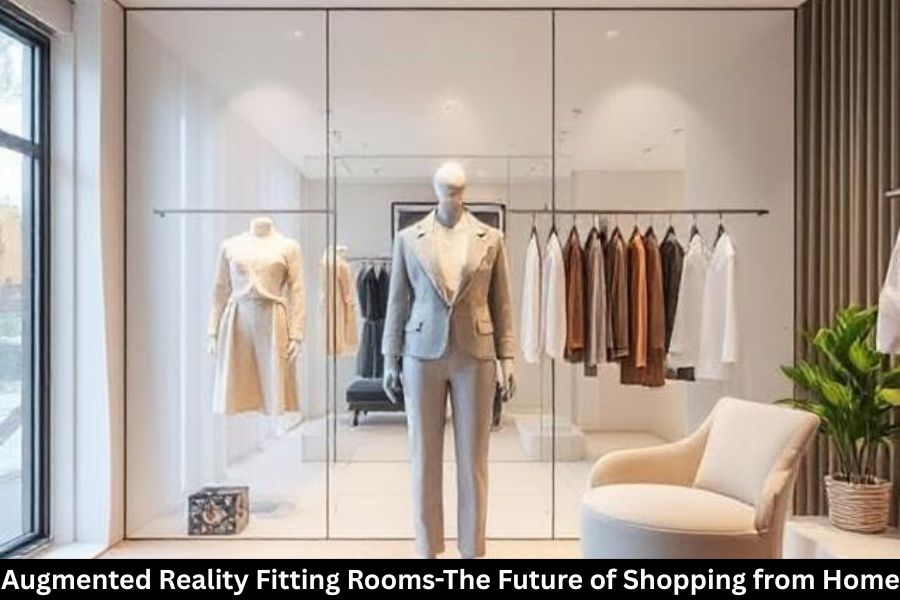
Online shopping has become an essential part of our lives. Whether we’re purchasing clothes, accessories, or gadgets, we all love the convenience of shopping from our own homes. However, one of the major challenges of online shopping has always been the inability to try on products before buying. That’s where Augmented Reality (AR) fitting rooms come into play—transforming how we shop and allowing us to experience clothing and accessories virtually, all from the comfort of our homes.
In this article, we will dive into how AR fitting rooms work, why they matter, and how they are revolutionizing the future of shopping.
1. Introduction: The Rise of Virtual Shopping Experiences
The rapid growth of e-commerce and online retail has reshaped the shopping landscape. While shopping from home has been a major convenience, it has always lacked the tactile experience of trying things on in a physical store. This gap has driven the need for innovative solutions—like augmented reality fitting rooms—that merge the digital world with the physical one. AR fitting rooms promise to bridge this gap by offering a virtual try-on experience that allows customers to visualize themselves in products before making a purchase.
What is Augmented Reality?
Augmented Reality is a technology that superimposes computer-generated images, sounds, or other sensations on the real world. Unlike Virtual Reality (VR), which creates an entirely immersive environment, AR enhances real-world experiences by adding digital elements to them. In the case of AR fitting rooms, the technology overlays clothing or accessories on your own image in real-time, providing a life-like virtual try-on experience.
2. How Augmented Reality Fitting Rooms Work
AR fitting rooms are designed to simulate the experience of trying on clothes in-store without the need for physical garments. Using your smartphone, tablet, or even AR glasses, you can access virtual fitting rooms to see how clothing fits on your body. Let’s break down how this cutting-edge technology works.
2.1 Using a Camera for Real-Time Visualization
The key to AR fitting rooms lies in using a camera—typically the one on your mobile device or computer. The software analyzes your body shape, size, and posture, and then overlays the clothing or accessory onto your virtual image in real-time.
2.2 Virtual Try-Ons in 3D
Once the clothing is virtually placed on your image, you can rotate, zoom, and move to examine how the outfit looks from different angles. Some advanced AR systems also allow you to adjust the fit, color, and even the material texture to see how the fabric reacts to different light conditions.
2.3 Integration with Online Shopping Platforms
Many e-commerce platforms and apps now feature AR fitting rooms as part of their shopping experience. You can browse products and, using the AR feature, see how they look on your body before you even click “Add to Cart.” This integration helps create a seamless shopping journey from discovery to purchase.
3. Benefits of Augmented Reality Fitting Rooms
The introduction of AR fitting rooms is a game-changer for the shopping industry. Let’s explore the various benefits of this technology for both consumers and retailers.
3.1 Enhanced Convenience for Consumers
Shopping for clothes online has always been convenient, but it often comes with uncertainty—especially when it comes to sizing and fit. AR fitting rooms offer a way to virtually try on clothes without leaving your home. No more guessing if an item will fit or if the color looks as expected. Customers can instantly try on different items, improving their shopping experience and making decisions faster.
3.2 Reduced Return Rates
One of the biggest problems in online fashion shopping is high return rates. Often, clothing gets returned because it doesn’t fit properly or doesn’t look the same as it did online. With AR fitting rooms, customers can have a clearer idea of how an item will look on them, reducing the chances of an item being returned due to dissatisfaction. This ultimately saves time and money for both customers and retailers.
3.3 Greater Personalization
AR fitting rooms can also enhance personalization by offering product recommendations based on a customer’s body shape, style preferences, or previous purchases. Some platforms even allow users to save their virtual wardrobe, providing a quick way to review past outfits or try on new ones.
3.4 Accessibility for People with Disabilities
AR fitting rooms also offer an added layer of accessibility for people with disabilities. For example, individuals who may struggle with traditional in-store fitting rooms can use AR technology to try on clothing from home, making shopping more inclusive and accessible for everyone.
3.5 Sustainability Benefits
By reducing the number of returns and exchanges, AR fitting rooms help lower the carbon footprint of shipping and transportation. This is especially important as the fashion industry moves toward sustainability, with many brands seeking to reduce their environmental impact.
4. The Impact on the Fashion Industry
The fashion industry has seen dramatic shifts in how people shop, and AR fitting rooms are poised to redefine the shopping experience. From small startups to global brands, many fashion retailers are embracing AR technology to stay ahead of the curve and meet consumer expectations.
4.1 Major Fashion Brands Adopting AR
Several leading fashion brands have already integrated AR fitting rooms into their apps and websites. Brands like Zara, H&M, L’Oreal, and Gucci are utilizing AR technology to offer virtual try-ons, enhance customer engagement, and drive sales.
4.2 The Role of AR in Fashion Marketing
AR has opened new opportunities for fashion marketing. For instance, some retailers have begun using AR to allow customers to try on clothing and makeup via social media platforms like Instagram. These interactive features not only increase consumer engagement but also help create brand loyalty and a sense of community around the brand.
4.3 Integration with Artificial Intelligence (AI)
When combined with AI, AR fitting rooms can take the virtual try-on experience to the next level. AI can analyze a customer’s body type, predict fit, and make recommendations based on style preferences and past purchases. This level of customization and convenience helps drive sales and enhances customer satisfaction.
5. Challenges of Augmented Reality Fitting Rooms
While AR fitting rooms have many benefits, there are still challenges that need to be addressed for the technology to become widespread.
5.1 Technical Limitations
Currently, AR technology isn’t perfect. The accuracy of body measurements, the way clothes fit, and the quality of the visual experience can vary depending on the app or device being used. Some users may not have access to high-quality devices capable of running advanced AR features, limiting the potential reach of this technology.
5.2 Privacy Concerns
Using AR fitting rooms requires customers to upload images or body scans, which could raise privacy concerns. To address these issues, companies must ensure that their technology adheres to strict privacy guidelines and protects user data from misuse or breaches.
5.3 Limited Product Range
Not all clothing items are available for virtual try-ons. Certain fabrics, cuts, or accessories may be difficult to simulate accurately, which can affect the customer experience. Retailers need to continually improve their AR capabilities to handle a wider range of products.
6. The Future of AR Fitting Rooms
Despite the current challenges, the future of AR fitting rooms looks incredibly promising. As technology continues to evolve, we can expect even more immersive and accurate experiences. With advances in AI, 5G networks, and more powerful AR glasses, the virtual shopping experience will become even more realistic and integrated.
6.1 AR Glasses: The Next Step
The next frontier in AR shopping may involve AR glasses, which would allow users to try on clothes in real-time, hands-free, and with even greater accuracy. Companies like Apple and Microsoft are already working on AR glasses that could take online shopping to a new level.
6.2 Integration with 3D Body Scanning
In the future, 3D body scanning technology could further enhance AR fitting rooms by creating a highly accurate virtual replica of the customer’s body. This would provide even more precise recommendations, improving the overall shopping experience.
7. Conclusion: The Future of Shopping from Home
Augmented reality fitting rooms are transforming the way we shop by providing a more interactive, personalized, and convenient experience. As this technology continues to evolve, it will not only reduce returns and improve satisfaction but also revolutionize how we shop, making it more accessible and sustainable. For both consumers and retailers, AR fitting rooms offer a glimpse into the future of shopping—a future where technology and fashion blend seamlessly to create an entirely new retail experience.
FAQs
1. What is an AR fitting room?
An AR fitting room allows customers to try on clothes virtually by using augmented reality technology, which superimposes digital clothing onto the user’s image.
2. How does AR fitting technology work?
AR fitting technology uses a camera to capture the user’s image and overlays clothing or accessories in real-time, allowing them to see how the item looks and fits without physically trying it on.
3. Are AR fitting rooms accurate?
While AR fitting rooms are generally accurate, the technology is still evolving, and there may be some limitations in terms of how clothes fit or how accurately the digital clothing matches real-world textures.
4. What are the benefits of using AR fitting rooms?
Benefits include greater convenience, reduced returns, personalized shopping experiences, sustainability, and accessibility for people with disabilities.
5. Will AR fitting rooms replace in-store shopping?
While AR fitting rooms enhance the online shopping experience, they are unlikely to fully replace in-store shopping. However, they will likely continue to play an important role in the future of retail.