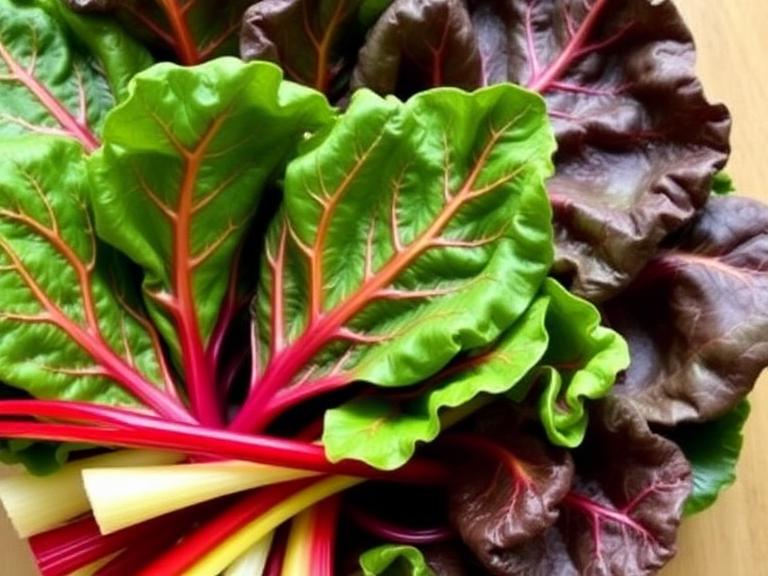
If you’ve ever walked through a vegetable market and spotted leafy greens with vibrant red, yellow, and orange stems, you’ve likely encountered rainbow Swiss chard. Despite the name, Swiss chard didn’t actually originate in Switzerland—it comes from the Mediterranean region and belongs to the same family as beets and spinach.
Rainbow Swiss chard isn’t a completely different vegetable—it’s essentially a mix of different colored varieties of Swiss chard bundled together. What makes it stand out is its visual appeal. Those jewel-toned stems almost look too pretty to cook, but trust me, they’re meant to be eaten and enjoyed. It’s one of those rare vegetables that feels both gourmet and accessible at the same time.
Beyond looks, it’s also incredibly resilient. This leafy green grows in poor soil conditions and requires minimal water, making it popular worldwide. That means whether you’re shopping at a high-end grocery store or a local market, you’re likely to find it year-round. Its adaptability also explains why it’s becoming more popular in modern diets focused on sustainability and nutrition.
Why It’s Called “Rainbow”
The “rainbow” in rainbow Swiss chard refers to the variety of stem colors—bright reds, sunny yellows, deep pinks, and even purples. Interestingly, while the colors differ, the flavor remains largely the same. These colorful stems don’t just make your plate look Instagram-worthy—they also hint at a range of plant compounds and antioxidants.
The leaves are always a deep green, but the stems bring personality. And here’s a fun fact: when cooked, those pigments can sometimes bleed into your dish, giving pasta or rice a slight pink or golden hue. It’s like cooking with edible art.
Swiss Chard vs Rainbow Chard
Key Differences Explained
Let’s clear up a common confusion: Swiss chard and rainbow chard are not entirely different vegetables. Swiss chard is the umbrella term, while rainbow chard refers specifically to a mix of colorful varieties bundled together.
Think of it like apples. “Apple” is the general category, while Granny Smith or Fuji are specific types. Similarly, Swiss chard includes varieties with white stems, red stems, or multicolored stems—rainbow chard simply combines them.
Flavor and Texture Comparison
In terms of taste, there’s no dramatic difference between Swiss chard and rainbow chard. Both have a slightly earthy and mildly bitter flavor when raw, which becomes sweeter and more delicate when cooked.
Texture-wise, the leaves are soft and tender once cooked, while the stems remain slightly crunchy—almost like celery. This dual texture makes it versatile in cooking. You get softness and crunch in the same bite, which is rare for leafy greens.
Nutritional Value of Rainbow Swiss Chard
Vitamins and Minerals Breakdown
Rainbow Swiss chard is basically a nutritional powerhouse disguised as a pretty vegetable. A single cup of cooked chard contains only about 35 calories but delivers massive amounts of nutrients.
Here’s a quick snapshot:
| Nutrient | Amount (per cup cooked) | Benefit |
|---|---|---|
| Vitamin K | 477% DV | Bone health & blood clotting |
| Vitamin A | 60% DV | Vision & immunity |
| Vitamin C | 35% DV | Skin & immune support |
| Magnesium | 36% DV | Muscle & nerve function |
| Fiber | ~4g | Digestion & weight management |
That’s a lot of nutrition packed into something so low in calories. It’s like getting premium fuel for your body without overloading it.
Health Benefits Backed by Data
Eating rainbow Swiss chard regularly can support heart health, improve digestion, and even help regulate blood sugar. Its high antioxidant content—including beta-carotene and flavonoids—helps protect your cells from damage.
Research also shows that diets rich in leafy greens like chard can reduce the risk of heart disease by up to 17% when consumed regularly. That’s a compelling reason to add it to your meals more often.
How to Prepare Rainbow Swiss Chard
Cleaning and Cutting Techniques
Preparing rainbow Swiss chard is simple, but doing it right makes a big difference in taste and texture. Start by rinsing the leaves thoroughly under running water. Dirt tends to cling to the crinkled leaves, so don’t rush this step.
Next, pat them dry or use a salad spinner. Excess water can affect cooking, especially if you’re sautéing.
Separating Leaves and Stems
Here’s where things get interesting: the stems and leaves cook at different speeds. The stems are tougher and need more time, while the leaves cook quickly.
To prepare:
- Slice the stems off the leaves
- Chop stems into small pieces
- Tear or chop leaves separately
This simple step ensures everything cooks evenly and prevents mushy leaves or undercooked stems.
How Do You Cook Rainbow Swiss Chard
Basic Cooking Methods
Cooking rainbow Swiss chard is surprisingly flexible. You can sauté it, steam it, boil it, or even bake it. The most popular method is sautéing with garlic and olive oil—it’s quick, easy, and delicious.
One important thing to remember: chard shrinks significantly when cooked. A large bunch can reduce to a small portion, so always cook more than you think you need.
Common Mistakes to Avoid
Many people make the mistake of overcooking chard. This not only ruins the texture but also dulls its vibrant color. Another common issue is skipping seasoning—chard benefits from bold flavors like garlic, lemon, and spices.
Cooking Rainbow Swiss Chard (Best Techniques)
Sautéing
Sautéing is the go-to method. Heat olive oil, add chopped stems first, then toss in the leaves. Cook until wilted, then finish with salt, pepper, and a splash of lemon juice.
Steaming and Boiling
Steaming preserves nutrients and keeps the flavor mild. Boiling works too, but it can reduce nutrient content if overdone.
Baking and Stir-Frying
Baking chard into casseroles or stir-frying it with spices adds depth and complexity. It pairs beautifully with garlic, onions, and even cheese.
Rainbow Swiss Chard Recipes
Simple Garlic Sautéed Chard
This is the easiest and most popular recipe:
- Olive oil
- Garlic
- Chopped stems and leaves
- Salt and pepper
- Lemon juice
Cook stems first, add leaves, sauté until tender, and finish with lemon.
Chard in Soups and Pasta
Rainbow Swiss chard works beautifully in soups, stews, and pasta dishes. It adds both nutrition and texture, making meals more satisfying.
Creative Modern Recipes
Try adding chard to smoothies, frittatas, or even wraps. It’s versatile enough to replace spinach in almost any recipe.
Tips to Enhance Flavor
Balancing Bitterness
Chard has a slight bitterness, but you can balance it with acidity (lemon or vinegar) or fat (olive oil or butter).
Best Ingredient Pairings
It pairs well with:
- Garlic
- Lemon
- Cheese
- Beans
- Eggs
Buying and Storing Rainbow Swiss Chard
How to Choose Fresh Chard
Look for bright stems and crisp leaves. Avoid wilted or yellowing greens.
Storage Tips for Longevity
Store in the fridge wrapped in a damp paper towel. It stays fresh for about a week.
Conclusion
Rainbow Swiss chard is more than just a colorful vegetable—it’s a nutrient-packed, versatile ingredient that can transform everyday meals into something vibrant and healthy. Whether you sauté it, toss it into pasta, or blend it into a smoothie, it offers a unique balance of flavor, texture, and nutrition. Once you learn how to prepare and cook it properly, it quickly becomes a staple in your kitchen
FAQs
1. Can you eat rainbow Swiss chard raw?
Yes, it can be eaten raw in salads, though it tastes slightly bitter compared to when it’s cooked.
2. Is rainbow chard healthier than spinach?
Both are nutritious, but chard contains higher levels of vitamin K and certain antioxidants.
3. Do you cook the stems of rainbow chard?
Absolutely! The stems are edible and add a crunchy texture—just cook them longer than the leaves.
4. Why does my chard taste bitter?
Bitterness is natural but can be reduced with lemon juice or proper cooking techniques.
5. How often should I eat Swiss chard?
You can include it several times a week as part of a balanced diet.